RESTORE — developing bioprinting technology for personalised cartilage regeneration.
Historical Horizon 2020 development combining nano-enabled bioinks, cartilage-regeneration research and application-specific bioprinting technology.
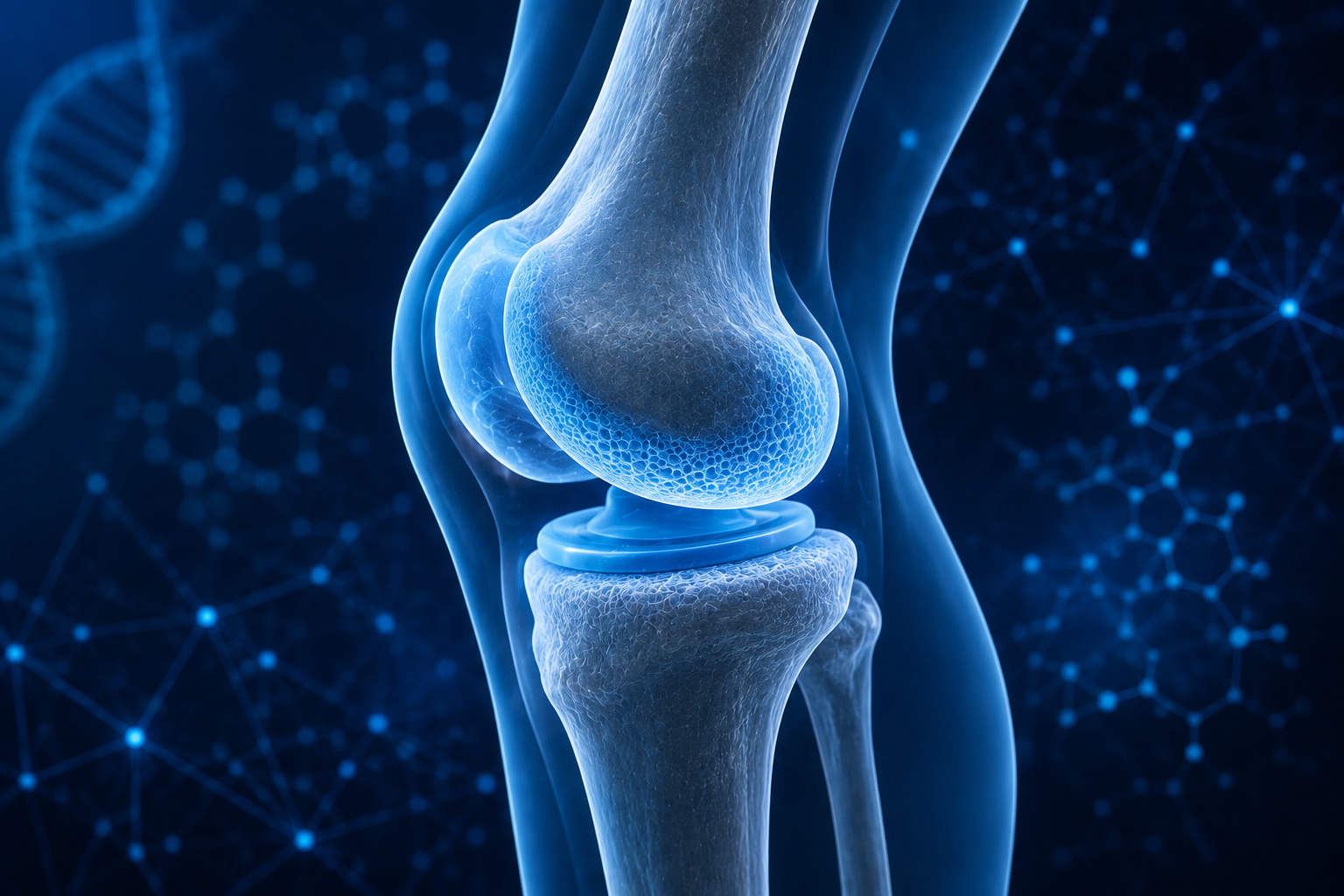
A manufacturing route for personalised cartilage microtissues.
RESTORE was a Horizon 2020 research project developing nano-enabled approaches for personalised cartilage regeneration. One project pathway used bioprinted cartilage microtissues for mild chondral lesions, combining biomaterial development, cells and application-specific biofabrication.
The project created an early environment for developing the Brinter platform around a demanding regenerative-medicine application rather than treating the printer as a fixed research instrument.
From printability testing to new printing modalities.
The work started under 3DTech, where the Brinter platform was developed toward more accurate and efficient printing of nano-enabled cartilage microtissues. In February 2020, printability trials used a nanocellulose/alginate bioink from the University of Gothenburg with the mechanically driven Visco Tool printhead.
The broader RESTORE role included developing bioprinter technology toward cartilage printing, implementing new printing modalities and contributing to optimisation of bioink composition and printing protocols. After the Brinter business was separated from 3DTech at the end of 2020, the work continued under Brinter.
An early example of application-driven platform engineering.
RESTORE demonstrates the development model that remains central to AM Technologies by Brinter: start from the biological and manufacturing requirements, then adapt the material handling, printhead technology, process parameters and platform architecture around the application.
The project also generated scientific and technical outputs around cartilage bioprinting and helped connect research-stage process development with later questions of reproducibility, validation and translation.
Explore the RESTORE project and historical development.
The official project archive documents the consortium, cartilage-regeneration objectives and early Brinter printability work.
Back to projects →